


Order-specific information: Published values are planning references. The accepted quotation must confirm the EC method, target and tolerance, pH, moisture, dimensions, weight tolerance, packing, quantity, documents, and commercial terms.
The active high-EC format is 30 × 30 × 10–15 cm at 5 kg ±10%, with an EC reference above 0.7 mS/cm, pH 5–7, and moisture 10–20%. Buyers should state the intended downstream process and the incoming acceptance procedure before quotation.
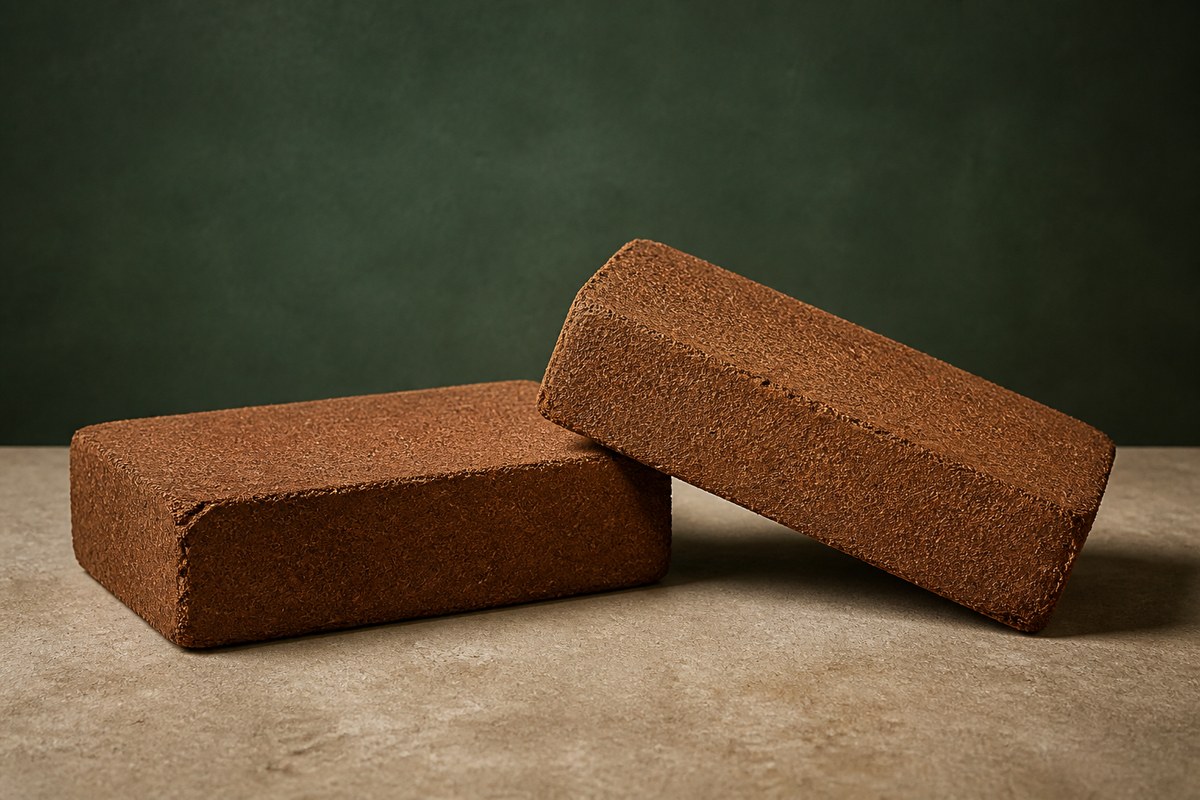
5kg high-EC cocopeat block specifications
The following values describe the current catalog reference. They are not a universal processing recipe or a guarantee that the material is ready for every crop or finished product.
| Specification | Planning reference |
|---|---|
| Format | Compressed 5kg cocopeat block |
| EC | Above 0.7 mS/cm; method to be agreed |
| Dimensions | 30 × 30 × 10–15 cm |
| Weight | 5 kg ±10% |
| pH | 5–7 |
| Moisture | 10–20% |
| MOQ | Confirm required quantity and current availability |
When a high-EC block may fit the procurement plan
Buying this grade starts with the receiving operation, not a generic good-or-bad label. Treat the published conductivity as an incoming-material parameter; only the buyer's documented treatment and verification can support a different downstream specification.
- Substrate blenders — document the blend formula, other inputs, finished target, sampling point, and release procedure.
- Processors — state whether the material will be washed, conditioned, screened, hydrated, or otherwise treated after receipt.
- Repackers and distributors — maintain one traceable identity from the inbound lot through repacked units, and ensure every sales description reflects the verified material.
- General material buyers — define the intended use and acceptance limit rather than assuming high EC is suitable for every horticultural application.
Buyer checks before approving a high-EC block
Map ownership from container receipt to final release. Before price and shipment terms are agreed, assign the checkpoints below to named parties.
Incoming grade
Record the receiving EC method, extraction ratio, water specification, reporting unit, sampling basis, limit, and retest procedure.
Downstream process
Define washing, conditioning, blending, hydration, repacking, or other treatment steps and the party responsible for each control.
Finished-product release
Set the target after processing, test point, lot identity, retained sample, approval authority, and evidence needed for release.
Labels and traceability
Align product name, grade statement, buyer marks, warehouse separation, recordkeeping, and downstream documents.
Processing and salt-management responsibilities
If conductivity will be reduced after delivery, the process plan should specify the water source, batch ratio, number of cycles, effluent route, hold point, and responsible quality approver.
An incoming high-EC result and a post-process result answer different questions. Keep them separate in records and do not relabel the material until the responsible party has verified the finished grade using the agreed procedure. The original order specification should remain traceable to the processed lot.
Receiving inspection, storage, and lot control
Use the same incoming EC and pH method that was accepted during qualification. Define sample count, block selection, moisture basis, tolerance, retest rule, and release authority. Where a sample or reference report is used, record whether it represents the current lot or only supports initial evaluation.
Store blocks under cover, protect them from moisture exposure, separate lots and grades, retain identifying marks, and plan enough space for any hydration or conditioning step. Review the document and analysis planning guide before requesting laboratory, inspection, or shipment evidence.
Packing, quantity, and trade-term planning
Block wrapping, buyer labels, cartons, pallets, marks, and loading assumptions are confirmed against the requested quantity. MOQ and current availability remain enquiry-specific. State the destination country and port, preferred trade term, required documents, inspection expectations, and target shipment window.
Use the MOQ and shipping terms guide to prepare the commercial comparison. The Indonesia cocopeat import guide explains how to connect the specification, quotation, documents, and shipment plan.
High-EC price planning reference
EC above 0.7 mS/cm · MOQ confirmed by enquiry
Planning guidance only, not a binding offer. The written quotation confirms grade, test method, packing, quantity, destination, Incoterm, freight scope, availability, and validity.
High EC versus the active low-EC grade
| Decision point | High EC | Low EC |
|---|---|---|
| Published EC reference | Above 0.7 mS/cm | Below 0.6 mS/cm |
| Qualification emphasis | Accepted incoming grade and downstream processing | Incoming low-EC method and tolerance |
| Commercial starting point | MOQ confirmed by enquiry | Listed MOQ 10 MT |
| Final decision | Application, test procedure, packing, evidence, and order terms must be accepted in writing. | |
Frequently asked questions about 5kg high-EC cocopeat
Is high-EC cocopeat ready for direct use in every crop?
No. Suitability depends on the application, source water, crop, blend, drainage, incoming EC method, and any conditioning the responsible buyer performs.
Can a buyer wash or condition the block after receipt?
A buyer may design a post-receipt treatment. Its process owner must document the water source, batch recipe, verification sample, acceptance threshold, and responsibility for the finished material.
How should incoming EC be checked?
Use the written extraction ratio, preparation method, water specification, reporting unit, sampling plan, tolerance, and retest rule accepted for the order.
What is the MOQ for the high-EC 5kg block?
No fixed MOQ is published on this page. Send the required quantity, packing, destination, and timing so current availability and the commercial basis can be confirmed.
Prepare the high-EC block RFQ
Include the incoming specification and the intended downstream workflow. This helps separate supplier commitments from buyer processing and finished-product responsibility.